Skip to content


If you have a bunion on your big toe, it may start as a minor bump that doesn’t cause much concern. As the years pass by, this bump may become painful, irritating when wearing shoes, and affect your gait while walking.
Most individuals live with this issue for years with no real need for treatment aside from wearing different shoes and using orthotic inserts, but all these methods address only the symptoms, and not the underlying bone deformity.
What Is a Big Toe Bunion?
When most people use the word bunion, they are talking about a bunion on the big toe. This is the most common type of bunion and is also known as a hallux valgus bunion.
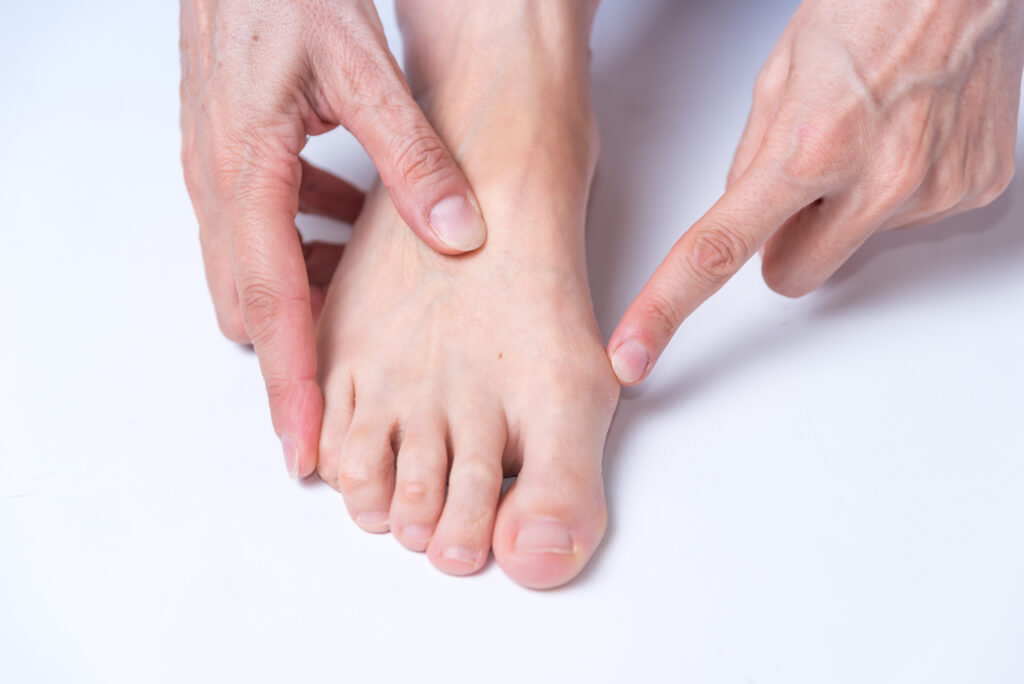
A big toe bunion forms at the joint where the big toe meets the foot. As the joint shifts out of alignment, the big toe starts to lean toward the second toe while the joint at the base of the toe pushes outward.
This creates the visible bump many people associate with bunions.
Over time, a big toe bunion may cause:
- Pain around the big toe joint
- Swelling and redness
- Difficulty wearing certain shoes
- Calluses where the toes rub together
- Stiffness in the joint
Some bunions stay mild for years. Others gradually become more painful, more noticeable, or harder to manage.
Bunions on the Big Toe vs. Other Toes
When most people talk about a bunion, they are usually referring to the bump that forms at the base of the big toe. This classic type of bunion, also called a hallux valgus bunion, develops when the big toe joint shifts out of position and the toe begins leaning toward the second toe.
A similar bump can also form on the outside of the foot near the base of the little toe. This is called a bunionette, or tailor’s bunion. A big toe bunion affects the larger joint on the inside of the foot, while a bunionette affects the smaller joint on the outside of the foot. Like traditional bunions, bunionettes can progress through different stages, ranging from a mild prominence with occasional discomfort to a more pronounced deformity that causes pain, irritation, and difficulty wearing certain shoes.
Both conditions can cause shoe irritation, redness, swelling, and pain, but they affect different joints and may require different treatment approaches. If your symptoms are located near the base of the little toe rather than the big toe, you may be dealing with a bunionette rather than a traditional bunion.
Why Bunions Develop on Big Toes
Many people assume bunions are caused only by wearing the wrong shoes, but the cause is usually more complex. Bunions often develop because of foot structure, foot mechanics, or repeated pressure on the big toe joint.
Factors that may contribute to bunions include:
- Genetics
- Flat feet
- Loose ligaments
- Poor biomechanics of the foot
- Joint inflammation disorders
Tight, narrow, or pointed shoes can make bunion pain worse and may speed up progression, but they are not always the original cause.
Can a Big Toe Bunion Go Away on Its Own?
Once the bones have shifted out of alignment, a bunion will not go away on its own. Sometimes, the bunion will remain unchanged. In other cases, the deformity may become more painful or more noticeable over time.
This does not necessarily mean that you have to resort to surgery. Many people manage bunion symptoms with proper footwear, padding, orthotics, activity changes, and other conservative treatments. The best approach depends on the severity of the bunion and how much it affects your daily life.
Non-Surgical Treatment Options for Bunions
The goal of non-surgical treatment is usually to reduce pain, minimize irritation, and help you stay active comfortably.
Common conservative treatments include:
- Wider shoes with more room for the big toe
- Custom orthotics
- Padding around the bunion
- Activity modifications
- Anti-inflammatory treatment when appropriate
These approaches can often improve comfort significantly, especially when symptoms are still mild to moderate.
Do Bunion Correctors Provide Long-Term Relief?
Bunion braces, splints, and toe spacers are popular because they are easy to find and relatively affordable.
Some people may feel temporary relief from these devices because they can reduce pressure while being worn.
Once the device is removed, the toe goes back to its former position.
For that reason, these devices are better viewed as comfort tools, not long-term corrections.
When Is Surgery Considered?
It becomes necessary to consider surgery if one has developed a bunion on their big toe that has started causing discomfort in their life or while engaging in activities. This bunion is found on the joint in the big toe; therefore, the pain associated with it occurs during activities like walking and wearing tight shoes.
Surgery may be worth discussing if you have:
- Ongoing pain at the big toe joint despite conservative treatment
- Difficulty finding shoes that do not press on the bunion
- A big toe that continues to lean toward the second toe
- Trouble walking, exercising, or staying active because of big toe pain
- Crowding, rubbing, or overlap between the big toe and second toe
The decision is usually based on how much the bunion affects comfort, movement, and daily life, not appearance alone.
How Bunion Surgery Provides Long-Term Relief
Unlike conservative treatment, bunion surgery on the big toe corrects the deformity of the joint at the base of the big toe. Apart from reducing the irritation caused by the bump, the surgery aims at correcting the misalignment of the big toe.
Depending on the severity of the big toe bunion, surgery may involve:
- Realigning the bone at the big toe joint
- Joint stabilization
- Balancing of soft tissue surrounding the great toe
- Fixation of any associated toe deformity or toe crowding
The goal is to improve big toe alignment, reduce pain, make shoes more comfortable, and help prevent the bunion from worsening.
Choosing the Right Treatment for Your Bunion
Just because you have a bunion in your big toe does not necessarily mean that surgery is needed. Some patients need just help relieving pressure caused by shoes, whereas others complain about pain when they are walking, working out, playing golf, hiking, or even standing up.
Factors to be considered include:
- How far the big toe has shifted
- Pain at the base of the big toe
- Shoe irritation or pressure over the bunion
- Your activity level
- Your foot structure and long-term goals
An accurate evaluation can help determine whether conservative care is enough or whether surgical correction may offer better long-term relief.
Long-Term Relief Starts with Understanding the Cause
The presence of a bunion at the base of the big toe not only causes pain but is also indicative of the misalignment of the big toe joint. The misalignment of the joint can lead to problems during walking and when wearing footwear.
If you are experiencing discomfort caused by a bunion on the big toe, whether it is mild or more challenging to manage, treatment for this condition must begin with identifying the reason behind the misalignment and how far the joint has been affected.
Our foot doctors will be able to guide you regarding both surgical and non-surgical treatments. Contact us today to set up an appointment for treatment of your bunion problem.