Flat feet are common, but when they start causing pain, fatigue, or changes in the way you walk, they’re worth paying attention to. Some people have low arches and never think much about them. Others start noticing aching feet, ankle strain, or discomfort that travels into the knees, hips, or back.
Flat feet don’t affect everyone the same way. Some people have no symptoms at all, while others deal with ongoing pain or fatigue. What actually helps depends on what’s causing the issue, how much it’s progressed, and how it’s affecting your day-to-day movement. In many cases, flat feet can be managed without surgery, but finding the right approach makes a big difference.
What Does It Mean to Fix Flat Feet?
For most adults, fixing flat feet does not mean rebuilding the arch in the foot. Instead, it typically involves making your feet better supported, reducing pressure on your feet and ankles, and helping your body move more efficiently.
Fixing flat feet might involve:
- better footwear
- orthotics
- stretching and strengthening
- activity changes
- treatment for a collapsing arch
The aim is not to change how your foot looks. The aim is to help you walk more comfortably and prevent it from getting worse.
The Best Shoes for Flat Feet Support
One of the easiest and most effective changes you can make is in your footwear. Flat feet often feel worse in shoes that are too flat, too soft, or have worn-out soles. If your shoes do not support the arch or help control rolling inward, the discomfort is likely to build up over the course of the day.
A supportive shoe should have:
- firm support in the arch
- a stable heel counter
- adequate cushioning but not too soft
- a comfortable shape that doesn’t crowd the foot
If you are on your feet a lot, this change alone may make a big impact.
Do Orthotics Help with Flat Feet?
For many people, orthotic shoe inserts are one of the most helpful parts of treatment. Orthotics can be beneficial in helping to support the foot, as well as in reducing stress with each step.
While over-the-counter orthotics can be beneficial for some people, custom orthotics can be even more beneficial, particularly when dealing with chronic pain or complex foot mechanics. This is because they are specifically made for each foot, making them more beneficial in the long run.
Exercises for Flat Feet and Arch Support
Just as outside support is necessary, so is internal support. Flat feet are often associated with weak foot and ankle muscles, tight calf muscles, or poor walking technique.
Some exercises that can help include:
- stretching your calf muscles
- lifting your heels off the ground
- curling your toes or using a towel to help lift your toes
- balancing on your feet
- strengthening the muscles and tendons that support the arch
It doesn’t take a rigorous workout to improve your flat feet. In fact, in most cases, a light workout will do more for your flat feet than attempting a rigorous workout and then giving up.
Activity Changes That Can Help
If you’re suffering from foot pain, doing nothing to change high-impact activities will only make things worse. This is especially true if you’re running, jumping, or walking on hard floors.
This does not, however, mean you should stop all activities. It could mean:
- doing fewer activities
- doing lower-impact activities
- not walking barefoot on hard floors
- increasing your stretching and warming up
These changes can help reduce pain without forcing you to stop moving altogether.
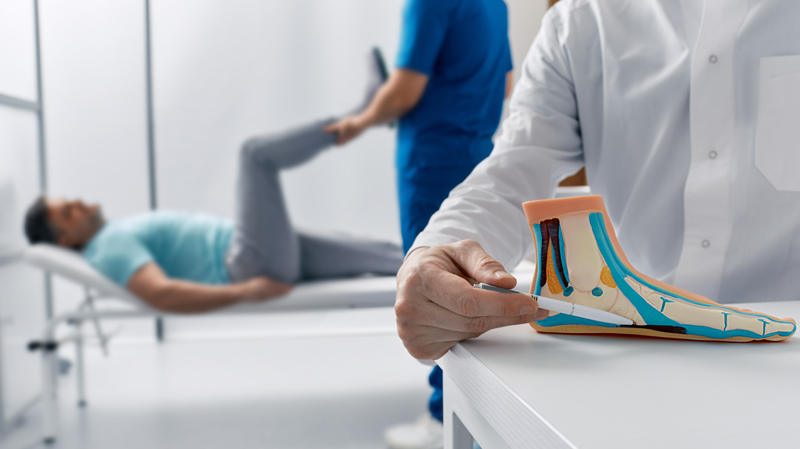
When to See a Podiatrist for Flat Feet
If you have already tried better shoes and inserts but still have pain, it’s a good idea to get evaluated. The same is true if one foot is getting flatter over time, your ankle feels weak, or you’re starting to notice discomfort higher up in the knees or hips.
A podiatrist can figure out whether the issue is:
- flexible flat feet
- tendon dysfunction
- arthritis
- a structural alignment problem
- something else entirely
That kind of clarity matters because the right treatment depends on the actual cause.
How Tendon Issues Impact Flat Feet
In adults, painful flat feet are often tied to posterior tibial tendon dysfunction. The posterior tibial tendon plays an important role in supporting your foot’s arch. When it becomes inflamed, weakened, or torn, the foot can gradually flatten more over time.
That is one reason why flat feet should not always be dismissed as “just how your feet are.” If a tendon is causing the problem, treatment may need to go beyond shoes and inserts. Some patients need bracing, physical therapy, or a period of activity reduction to keep the condition from progressing.
Can Surgery Help Fix Flat Feet?
Yes, in some circumstances, but only for more severe and painful flat feet. Most people do not require surgery. Surgeons recommend surgery for flat feet that are becoming more unstable, for those whose arch is collapsing further, and for those in whom other treatments are failing to provide sufficient relief.
Surgery may involve:
- Tendon repair
- Bone realignment
- Joint stabilization
- Combination of procedures
The choice of procedure depends on the anatomy and severity of the condition.
How to Prevent Flat Feet from Getting Worse
Even though you may already have flat feet, there is a great deal you can do to help prevent your feet from getting worse. The best things you can do are often the simplest:
- Wear supportive shoes
- Replace your worn-out shoes before they deteriorate further
- Use your orthotics as prescribed
- Continue your stretching and strengthening
- Don’t wait until you are in pain
Treatment for Flat Feet at Vale Foot and Ankle
Painful flat feet are a common problem, but they don’t have to be a persistent problem. With the right treatment and support, you may be able to significantly alleviate your symptoms.
If your feet hurt, tire out too quickly, or seem to be changing the way you walk, it may be time to look more closely at what’s driving the problem. We don’t just identify flat feet, we work to understand why your arches are causing trouble, what tissues and joints are under stress, and which treatment options are most likely to help in your specific case. The right plan can make a real difference in your comfort, stability, and long-term mobility. Book an appointment today to get answers and a treatment plan built around your feet.