Skip to content

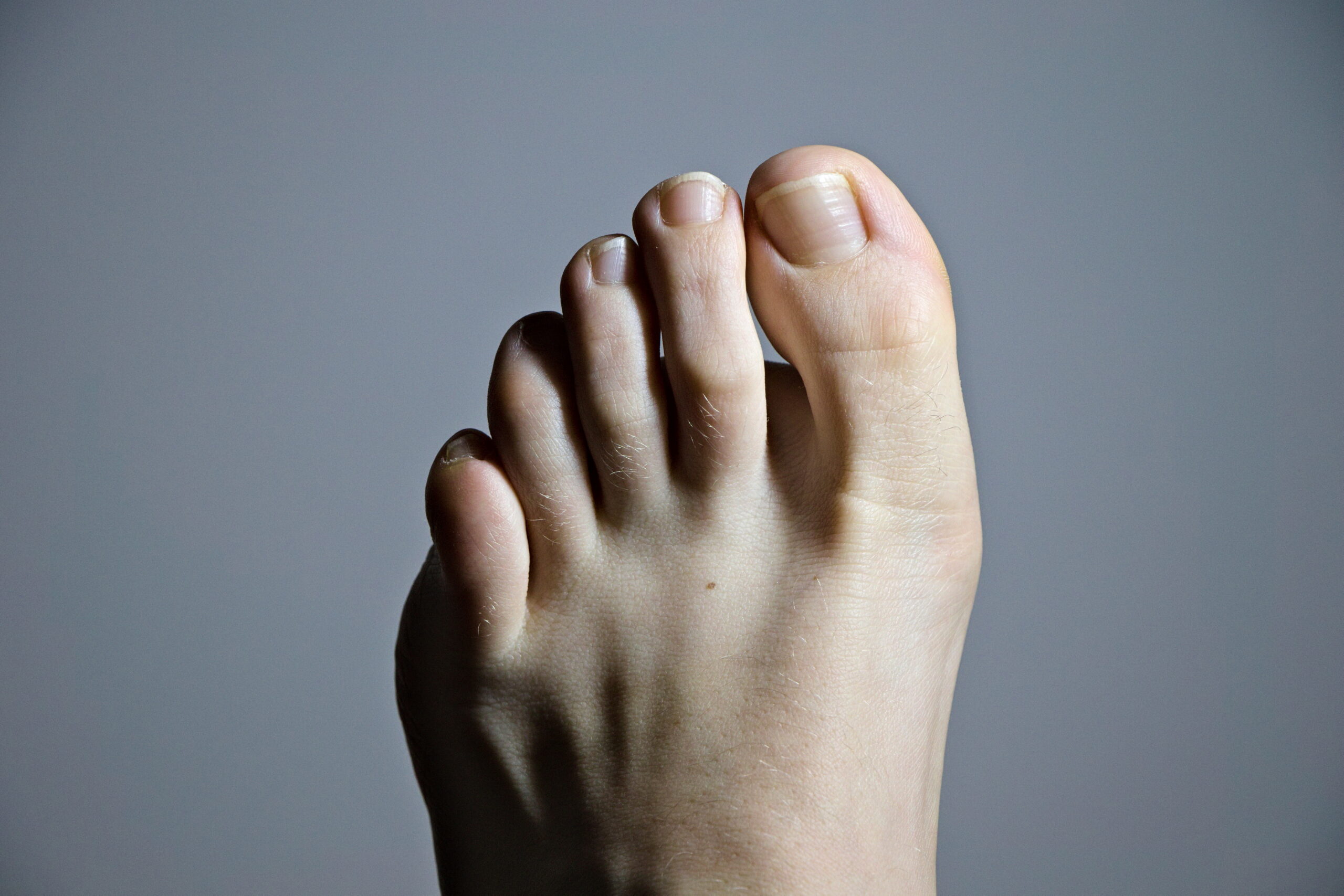
A bunion on the pinky toe can be easy to dismiss at first. It may start as a small bump on the outside of the foot that only bothers you in certain shoes. Over time, that spot can become sore, red, swollen, or painful enough to affect walking.
This type of bunion is called a bunionette, or tailor’s bunion. Instead of forming at the base of the big toe, it develops near the base of the little toe. The problem often becomes noticeable when shoes rub against the outside of the foot or place too much pressure on the fifth toe joint.
Patients throughout Oxford, Glastonbury, Shelton, and Newtown often seek care when the bump begins interfering with shoes, walking, or daily activity.
Some bunionettes stay mild for years. Others gradually become more painful, noticeable, or harder to manage. The right treatment depends on what is causing the pressure, how much the joint has shifted, and how the condition affects your daily life.
What Is a Bunion on the Pinky Toe?
A bunion on the pinky toe is a bony bump that forms along the outside of the foot near the base of the little toe. This area is where the fifth metatarsal bone meets the small toe.
When this joint shifts, angles outward, or becomes irritated by repeated pressure, the outside of the foot can become more prominent. Shoes may rub against the bump, causing pain, redness, swelling, or thickened skin.
A pinky toe bunion is not the same as a corn or callus, although those can develop over the bunionette because of shoe friction. The bump itself comes from the structure and position of the bone and joint.

Bunionette vs. Big Toe Bunion
When most people hear the word bunion, they think of a bump at the base of the big toe. That classic bunion is often called a hallux valgus bunion.
A bunionette is similar, but it occurs on the opposite side of the foot. Instead of affecting the big toe joint, it affects the little toe side of the foot.
A big toe bunion usually forms on the inside of the foot near the first toe joint. A bunionette forms on the outside of the foot near the fifth toe joint. Both conditions can cause shoe irritation, redness, swelling, and pain, but they involve different areas of the foot and may need different treatment approaches.
Symptoms of a Bunion on the Pinky Toe
A pinky toe bunion may not cause much discomfort at first. Many people only notice symptoms when wearing tighter shoes, narrow dress shoes, heels, cleats, skates, or shoes that press against the outside of the forefoot.
Common symptoms include:
- Pain on the outside of the foot near the little toe
- A visible bump at the base of the pinky toe
- Redness or swelling over the bump
- Tenderness when shoes press on the area
- A corn or callus over the irritated spot
- Burning, aching, or throbbing after activity
- Difficulty wearing certain shoes comfortably
- The pinky toe turning inward toward the fourth toe
The pain may be mild at first and only show up after a long day on your feet. As the area becomes more irritated, even normal walking or everyday shoes may become uncomfortable.
Why Does a Bunionette Develop?
A bunionette often develops because of foot structure, pressure, and the way weight moves through the outside of the foot.
In some people, the fifth metatarsal bone angles outward more than usual. In others, the foot shape, walking pattern, or shoe pressure places repeated stress on the little toe joint. Over time, the outside of the foot may become more prominent and more irritated.
Factors that may contribute to a bunionette include:
- Inherited foot structure
- A wider forefoot
- Flat feet or changes in foot mechanics
- Repeated shoe pressure on the outside of the foot
- Tight, narrow, or pointed shoes
- High heels
- Certain sports or activities
- Arthritis or joint inflammation
Shoes do not always cause the bunionette by themselves. However, footwear can make symptoms much worse when the outside of the foot is already under pressure.
Can a Pinky Toe Bunion Go Away on Its Own?
A bunionette will not usually go away on its own once the bone and joint position have changed. The bump may stay about the same for a long time, or it may become more painful and noticeable over the years.
That does not mean surgery is always needed. Many people manage symptoms with conservative treatment, especially when the bunionette is still mild or moderate.
The important thing is to understand the difference between reducing irritation and correcting the structure. Wider shoes, padding, orthotics, and activity changes may help the area feel better, but they do not permanently move the bone back into place.
Tailor’s Bunion Stages
A tailor’s bunion may start as a small bump that only bothers you in tight shoes. As it progresses, the bump can become more noticeable, the little toe may begin turning inward, and irritation from shoes may happen more often.
In more advanced cases, pain, swelling, corns, calluses, or toe crowding can make walking and wearing regular shoes more difficult. The stage of a tailor’s bunion depends on more than how it looks. Pain level, shoe fit, joint position, and daily activity all help determine the right treatment approach.
When Should You See a Podiatrist?
You should consider seeing a podiatrist if the bump near your pinky toe keeps hurting, makes shoes difficult to wear, or continues to get larger.
A podiatry evaluation may be helpful when:
- Pain lasts longer than a few weeks
- Shoes regularly irritate the outside of the foot
- Redness or swelling keeps returning
- A corn or callus forms over the bump
- Walking, exercise, or work becomes uncomfortable
- The pinky toe begins pressing into the fourth toe
- Home care is not helping enough
- You have diabetes, circulation problems, or numbness in your feet
Not every bump near the pinky toe is a bunionette. A podiatrist can determine whether the problem is related to joint alignment, pressure, arthritis, a cyst, a skin lesion, a fracture, or another condition.
How Is a Bunion on the Pinky Toe Diagnosed?
Diagnosis usually begins with a conversation about your symptoms. Your podiatrist may ask when the pain started, which shoes make it worse, whether the bump has changed, and how the problem affects walking or activity.
During the exam, a podiatrist may:
- Look at the position of the pinky toe and fifth metatarsal
- Press around the bump to locate tenderness
- Check for redness, swelling, corns, or calluses
- Evaluate foot shape and forefoot width
- Observe how pressure moves through the foot
- Review your shoes and activity patterns
Digital X-rays may be used to see the position of the bone and joint. Imaging can help determine how much the fifth metatarsal has shifted and whether arthritis, fracture, or another bone-related issue is contributing to the pain.
Non-Surgical Treatment Options for a Bunionette
Many bunionettes can be treated without surgery, particularly when treatment starts early before symptoms become severe.
Conservative treatment aims to relieve the pressure on the outside of the foot, reduce irritation, and make walking more comfortable.
Non-surgical treatment may include:
- Wider shoes with a roomier toe box
- Padding over the bunionette
- Avoiding shoes that press on the outside of the foot
- Custom orthotics to improve pressure distribution
- Anti-inflammatory medication when appropriate
- Corticosteroid injections in selected cases
- Bracing or offloading techniques
- Activity changes while symptoms settle
Small footwear changes can sometimes make a big difference. Shoes with a narrow toe box often squeeze the forefoot and increase rubbing over the bunionette. A wider, more supportive shoe can reduce pressure in that area.
Do Bunionette Pads or Toe Spacers Work?
Pads, sleeves, and toe spacers may help reduce rubbing while you are wearing them. They can be useful when the main problem is shoe irritation over the bump.
The limitation is that these devices do not correct the bone alignment. Once the pad or spacer is removed, the structure of the foot has not changed.
For that reason, bunionette pads are best viewed as comfort tools. They may help with pressure and friction, but they are not a permanent correction.
When Is Surgery Considered for a Pinky Toe Bunion?
Surgery may be considered when a bunionette continues to cause pain and conservative treatment no longer provides enough relief.
This is more likely when the bump makes it difficult to wear normal shoes, the little toe is shifting, or the outside of the foot hurts with walking, work, exercise, or daily activity.
Surgery may be worth discussing if you have:
- Ongoing pain despite conservative treatment
- Difficulty finding shoes that do not rub the bump
- A bunionette that continues to worsen
- Pain that limits walking, standing, or exercise
- Toe crowding near the fourth and fifth toes
- Repeated irritation, redness, corns, or calluses
The decision is usually based on pain, shoe fit, function, and quality of life, not appearance alone.
How Surgery Can Help a Bunionette
Unlike padding or footwear changes, surgery addresses the structural cause of a painful bunionette. Surgery reduces the bony prominence, improves alignment, and relieves pressure along the outside of the foot.
Depending on the severity of the bunionette, surgery may involve:
- Shaving or removing part of the bony prominence
- Realigning the fifth metatarsal bone
- Stabilizing the corrected bone position
- Addressing soft tissue imbalance around the little toe
- Correcting related toe crowding when needed
The exact procedure depends on the shape of the bone, the angle of the deformity, symptoms, and the patient’s activity needs.
Can a Bunionette Come Back?
A bunionette can come back in some cases, especially if the source of pressure or foot mechanics is not addressed.
Wearing supportive shoes with enough room in the forefoot, using prescribed orthotics, and avoiding repeated pressure on the outside of the foot may help reduce future irritation.
When surgery is conducted, recovery plays an important role in making sure the bunionette does not come back.
Do Not Ignore Pain on the Outside of the Foot
A bunion on the pinky toe may seem like a small problem at first, but it can become difficult to ignore when shoes, walking, or daily activity keep irritating the area.
The good news is that treatment does not always mean surgery. Many patients improve with conservative care, especially when the problem is evaluated early and the source of pressure is addressed.
At Vale Foot and Ankle Surgery, our podiatrists look at your foot structure, little toe alignment, footwear, and daily activities to understand what is causing your symptoms. From there, we can discuss conservative and surgical treatment options based on your needs.
If pain near your pinky toe is making it harder to wear shoes, walk, work, or stay active, contact Vale Foot and Ankle Surgery today to schedule an evaluation.