Skip to content


Yes, shockwave therapy can help relieve plantar fasciitis pain, particularly when heel pain has continued despite other treatments. Research suggests that shockwave therapy can reduce pain and improve foot function in some patients, although results vary and improvement is not always immediate.
Plantar fasciitis can be frustrating when the pain keeps returning. You might feel better after resting, only for the discomfort to return when you start walking or spend more time on your feet. For some people, stretching, supportive shoes, and orthotics help. Others continue to struggle with heel pain even after making these changes.
Shockwave therapy offers another non-surgical treatment option. Rather than relying on medication or surgery, it uses acoustic waves to stimulate activity in the affected tissue. But how does it work, and what should you expect from treatment?
What Is Shockwave Therapy for Plantar Fasciitis?
Shockwave therapy is a non-invasive treatment that uses acoustic wave energy to stimulate the tissue around a painful or injured area. In podiatry, it can be used for conditions affecting the tendons and fascia, including plantar fasciitis.
The plantar fascia is a thick band of tissue running along the bottom of the foot, connecting the heel to the toes. It helps support the arch and absorbs some of the strain placed on your foot during movement. When the tissue becomes irritated from repeated stress, pain often develops beneath the heel.
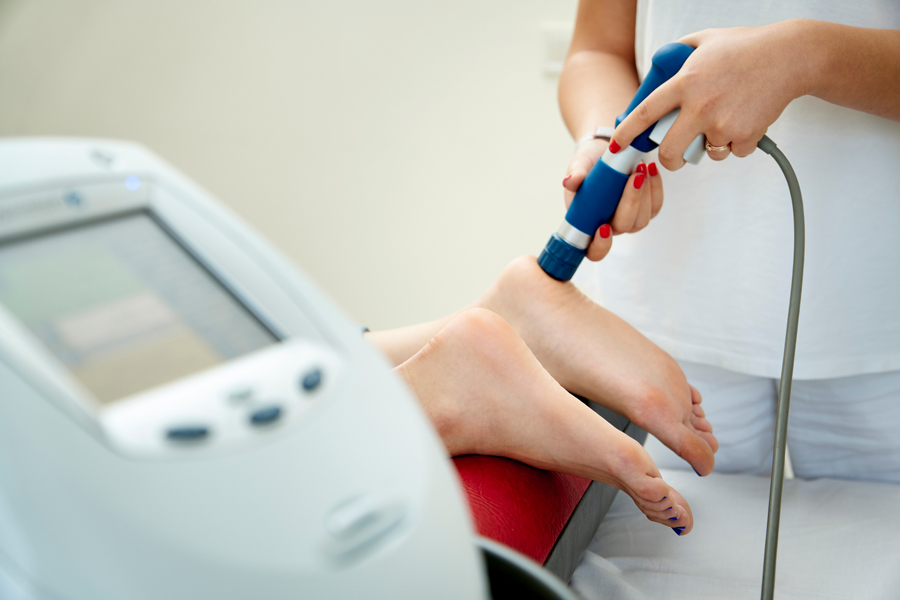
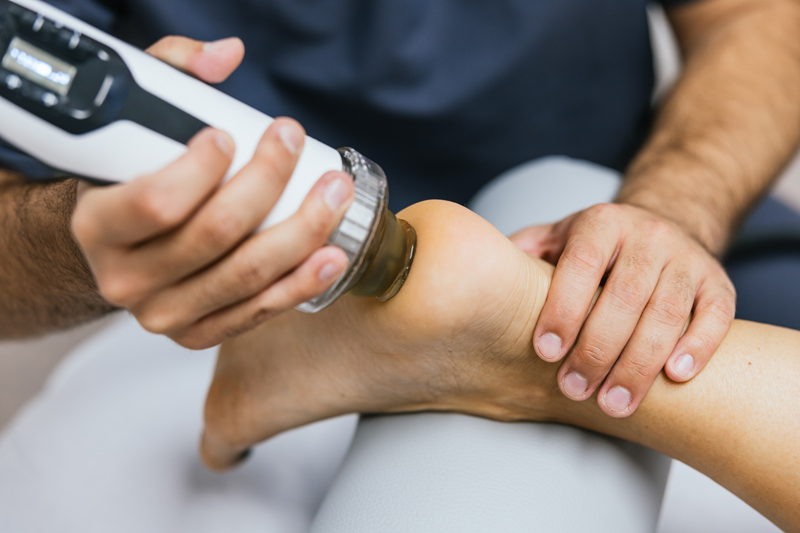
Shockwave therapy delivers acoustic waves through a handheld device placed against the skin. The treatment is performed in the office and does not require incisions or injections.
At Vale Foot and Ankle Surgery, we offer radial shockwave therapy (RSWT), which delivers acoustic energy across the treated area. It can be considered alongside other treatments depending on the severity of your symptoms and how your plantar fasciitis has responded to previous care.
How Does Shockwave Therapy Work for Plantar Fasciitis?

Plantar fasciitis often develops when repeated strain exceeds the plantar fascia’s ability to recover. Over time, the tissue may become persistently irritated, making it difficult to walk comfortably or return to normal activity.
Shockwave therapy delivers acoustic waves to the affected area. These waves create mechanical stimulation within the tissue, which may encourage biological responses involved in repair and pain regulation.
Studies have used different types of shockwave therapy and treatment schedules, which makes their results difficult to compare. Some patients experience noticeable improvement, while others find that the treatment provides less relief than expected.
The treatment does not physically remove damaged tissue or immediately repair the plantar fascia. Instead, it aims to encourage a response that may help reduce pain and support recovery over time.
Does Shockwave Therapy Actually Work for Plantar Fasciitis?
Research suggests that shockwave therapy can be effective for plantar fasciitis, particularly in patients with persistent heel pain. Clinical studies have reported improvements in pain and function following treatment, making it a reasonable option for some patients who want to avoid more invasive procedures.
However, not every study has produced the same results. Researchers have used different devices, treatment intensities, and numbers of sessions, which makes direct comparisons difficult. Some patients experience noticeable improvement, while others have a smaller response or do not benefit enough from treatment.
Another consideration is that shockwave therapy does not address every factor contributing to plantar fasciitis. If tight calf muscles, unsupportive footwear, or repeated strain continue to place pressure on the heel, these issues may still need attention.
For this reason, shockwave therapy is often most useful as part of a broader treatment plan rather than as a replacement for other forms of care.
Who Is a Good Candidate for Shockwave Therapy?
Shockwave therapy may be worth considering if plantar fasciitis has been affecting your ability to walk comfortably or remain active. It is particularly relevant for patients who have experienced heel pain for several months or have not improved enough with traditional treatment.
You may be a candidate if:
- Heel pain keeps returning despite changes in footwear or activity.
- Stretching and orthotics have not provided enough relief.
- You experience persistent discomfort when walking or standing.
- You want to explore non-surgical treatment options.
- Your podiatrist has confirmed that plantar fasciitis is causing your symptoms.
Although shockwave therapy is often considered for ongoing heel pain, some patients may benefit from receiving it earlier in their treatment. Your podiatrist can recommend when to introduce it based on your symptoms and diagnosis.
Heel pain is not always caused by plantar fasciitis. Nerve irritation, stress fractures of the heel bone, and problems with the heel pad can cause similar symptoms. A podiatrist can help determine whether plantar fasciitis is responsible for your discomfort and whether shockwave therapy would be appropriate.
What Happens During Shockwave Therapy for Plantar Fasciitis?
Shockwave therapy is performed during an office appointment. Your podiatrist identifies the area that needs treatment and places a handheld applicator against the skin, usually with a coupling gel to help transmit the acoustic waves.
As the device delivers energy, you may feel repeated tapping or pulsing sensations around the heel. The treatment can be uncomfortable in particularly tender areas, but the intensity can be adjusted based on your response.
A typical radial shockwave treatment plan at Vale Foot and Ankle Surgery may involve approximately five weekly sessions, with each session lasting around five minutes. The exact schedule depends on your condition and the area being treated.
Because treatment does not involve surgery or anesthesia, most patients can return to their usual daily activities afterward. Your podiatrist may recommend temporarily limiting activities that place excessive strain on the heel.
How Long Does Shockwave Therapy Take to Work?
Some patients notice less pain after the first few sessions, while others experience gradual improvement over several weeks. Shockwave therapy does not always provide immediate relief because the effects can develop as the treated tissue responds over time.
It is common for improvement to continue after the treatment series has finished. Your response depends on several factors, including how long you have had plantar fasciitis, the severity of your symptoms, and whether the underlying strain on your foot is being addressed.
Even if your heel starts feeling better, returning too quickly to activities that previously caused pain could aggravate the plantar fascia again. Following your podiatrist’s recommendations for footwear, stretching, and activity can help support your recovery.
Is Shockwave Therapy Painful?
Most patients can tolerate radial shockwave therapy without anesthesia, although some discomfort during the session is possible. The sensation is often described as rapid tapping against the painful area of the heel.
After treatment, you may experience mild soreness or tenderness for a day or two. Temporary redness or bruising can also occur. These effects are generally short-lived, although your podiatrist should review the potential risks and whether you have any medical conditions that make treatment unsuitable.
If you experience unusual or worsening symptoms after a session, contact your provider for advice.
What Are the Benefits of Shockwave Therapy for Plantar Fasciitis?
One reason patients consider shockwave therapy is that it provides another option for persistent heel pain without requiring surgery.
Potential benefits include:
- Non-surgical treatment with no incisions
- No anesthesia required for typical radial treatment
- Short office appointments
- Little interruption to most daily routines
- Potential improvement in heel pain and walking comfort
- An additional option when other treatments have not helped enough
These benefits do not mean shockwave therapy will work for everyone. The response varies between patients, and some may need additional treatment to manage their plantar fasciitis.
Shockwave Therapy vs. Other Plantar Fasciitis Treatments
Shockwave therapy is one of several treatments available for plantar fasciitis. The most appropriate approach depends on your symptoms, how long they have been present, and what is placing stress on your heel.
Stretching exercises can help address tightness in the calf muscles and plantar fascia, while supportive footwear and orthotics may help reduce pressure during walking. Physical therapy can also be helpful when movement restrictions or muscle weakness are contributing to the problem.
Corticosteroid injections are sometimes considered for short-term pain relief, although they have potential risks and do not correct the underlying causes of plantar fascia strain.
Shockwave therapy takes a different approach by using acoustic energy to stimulate the affected tissue. It can be used alongside other non-surgical treatments rather than replacing them entirely.
Surgery is generally reserved for a small number of patients whose symptoms remain severe after an extended period of appropriate non-surgical care.
Can Shockwave Therapy Permanently Cure Plantar Fasciitis?
Shockwave therapy can provide lasting improvement for some patients, but it cannot guarantee that plantar fasciitis will never return.
Heel pain can come back if the foot continues to experience repeated strain. For example, a sudden increase in running, long periods of standing, or footwear that does not provide adequate support may aggravate the plantar fascia again.
Long-term improvement often depends on more than one treatment. Once your symptoms begin to settle, your podiatrist may recommend continuing certain exercises, reviewing your footwear, or making gradual changes to your activity level.
It is also important to recognize that a successful treatment does not necessarily mean the plantar fascia has returned to its previous appearance on imaging. What matters clinically is whether your pain has improved and you can move comfortably.
Is Shockwave Therapy for Plantar Fasciitis Worth It?
For patients with persistent plantar fasciitis, shockwave therapy can be worth considering, particularly when other non-surgical treatments have not provided enough relief. Research supports its potential to improve pain and function, but the benefits are not guaranteed.
There are also practical considerations. Radial shockwave therapy is generally not covered by insurance at Vale Foot and Ankle Surgery, so patients should discuss the cost of treatment before beginning.
The decision should be based on your diagnosis, the treatments you have already tried, your symptoms, and what you hope to achieve. A podiatrist can help you determine whether shockwave therapy is a reasonable option or whether another approach would be more appropriate.
Find Out if Shockwave Therapy Can Help Your Heel Pain
If you have plantar fasciitis and have tried changing footwear, stretching, and reducing activity but are still experiencing heel pain, shockwave therapy could be a non-operative way to help alleviate chronic pain. The right treatment will depend on what is causing your symptoms.
Our podiatrists can help identify what is causing your heel pain and whether shockwave therapy would be suitable in your case. We can also talk about other treatments that can help you get back to doing what you enjoy.
If plantar fasciitis has been bothering you and you are looking for another treatment option, contact us today to schedule an appointment.